Wednesday, April 30, 2025

Final Blog Post: A Brand

As a 20 year old, I likely have a social media addiction and deny it like every other 20 something.

My best form of communication is phone call, I often coordinate group projects through Snapchat, and discover new artists and opportunities through Instagram. I reply to my emails, just not as often as I will a text message.

This is the norm for my generation—to be multi-literate through different forms of social media. For the 2025-2026 accademic year, I will be the social media cordinatior of the High Point University Chamber Singers. This entails upholding the chamber singers branding and being our own publicity when it comes to concerts and other events. My personal qualifications would be those of my own social media pages.

Through Instagram, I have been crafting my own brand since I started my account in 2017. On this one social media page you'll be able to find out that I have been doing theater since at least 2018, I live in New Jersey or at least close to it, I spend a lot of time in Florida and New York City, I graduated high school in 2023 and now go to High Point University, and seeing concerts as a favorite past time of mine.

My timeline image is important to me... that's why it takes me at least three months to make one post.

In addition, I also have a small account dedicated to the art I had created through High School to keep track for my AP Art Portfolio, that remains encapsulated in time from 2023. 

When you search "Ella Marron" on Google, my Linkdin is the first link. Until this past year, I did not have an account. After contributing so much of my time to many activities in high school and even now in college, I find it difficult to be able to list them on my Linkdin page while keeping a professional image, especially considering much of what I did revolved around theater and choir instead of media production and journalism. However, after taking Motion Graphics this semester I now have an active reel on youtube and this summer I will piece together a production reel as well.

Tiktok is not an account that I cultivate, however with my new position, I will have to reinstall it back on my phone. It's deletion had followed me figuting out I spent at least three hours a day on it during covid. I have since developed a slightly less severe addition to Instagram Reels.

Putting an emphasis on digital footprint at such a young age, has been both constructive and destructive to my generation. Many of us choose the smart decision of not including partying, illicit drugs, and illegal behavior on our brands… But some of us crumble under the pressure of needing to look perfect.

Monday, March 10, 2025

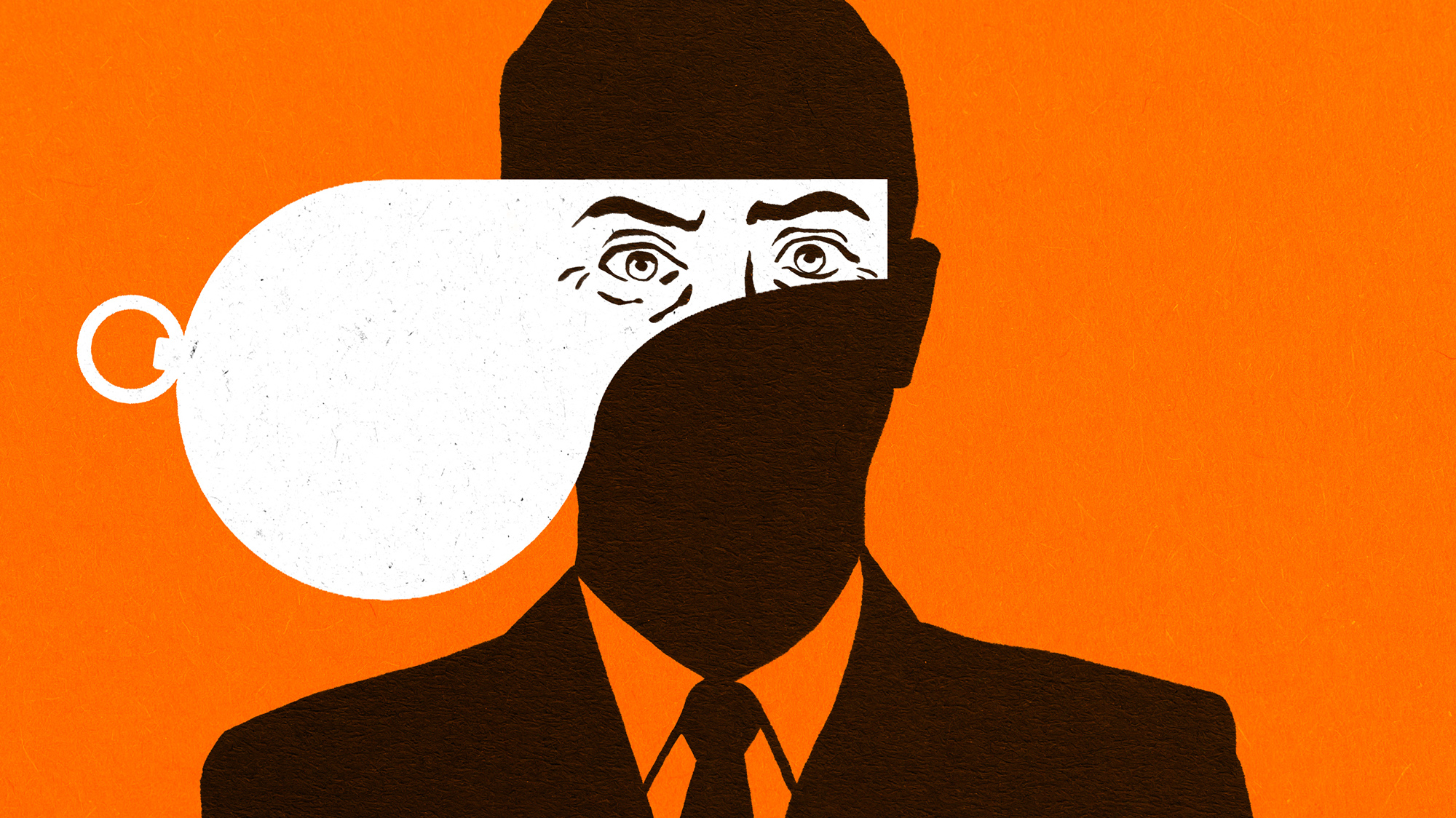
EOTO 2: Government Whistleblowers

Public Servants Are Risking Everything to Expose Government Corruption.  Donald Trump Is Making Their Lives Hell. – Mother Jones


Complete this sentence if you will: snitches get...

Stiches. 

While the phrase might carry a negative connotation, in the context of government and public accountability, “snitching” can actually be a courageous and necessary act.

Government whistleblowing is the activity of a person, often an employee, revealing information about activity within a private or public organization that is deemed illegal, immoral, corrupt, unsafe or fraudulent. 


The concept of whistleblowing isn't new. It dates back mellennia. One could argue that Socraties was somewhat of a whistleblower in his day due to his persistent questioning of Athenian leader’s public policies and behaviors which led to his death sentence after being charged with “corrupting the youth.” That tragic outcome parallels the consequences many modern whistleblowers still face—social ostracism, legal troubles, and personal sacrifice. 


Moving forward in history to 1883, the U.S Civil Service Reform Act kind of began to address issues of government accountability by outlining a merit system for federal employment. Meaning, employees should be hired based on their skills and qualifications, not political affiliation which would protect those who MIGHT report misconduct from retaliation. 


The confusion was cleared up later as the Whistleblower Protection Act of 1989 was officially passed which protected federal employees who report misconduct from relaiation, creating a legal framework for whistleblowers to act without fear of job loss or other punishments. 


A famous example of whisleblowing would be before this act in 1971 when Daniel Ellsberg leaked the Pentagon Papers to the New York Times that exposed how Lyndon B. Johnson’s administration had “systematically lies, not only to the public but also to Congress.” These papers gave direct evidence of the government’s attempts to conceal the truth about their war-efforts during the Vietnam War. 


A year later, in 1972, Mark Felt, better known as “Deep Throat,” provided key information during the Watergate scandal, which ultimately lead to President Nixon’s famous resignation. 


We see this trend continue into more recent times with the WikiLeaks in 2006 and even The Twitter Files in 2022. Each of these examples, along with many others highlight the ongoing struggle between national securtity and public interest and its relevancy today.

Whistleblowing remains crucial in today’s modern era as it fosters governemnt accountablility, transparency, and trust. In the age we’re in the systems of power seem vastly unbalances, but The Whistleblowing Act of 1989 along with the blunt nature of technology bring some of that control back to the public to keep upper levels in check. 


As technology rapidly to advances, the role of whistleblowers is becoming more important in preventing misuse of new surveillance tools, financial practices, and policy decisions that could harm citizens' rights.


In conclusion, government whistleblowers play a vital role in maintaining democratic integrity and accountability. Their courage in revealing information that might otherwise be concealed helps ensure that governments are held accountable to the people they serve.


Wednesday, February 26, 2025

EOTO 1: The Invention of DVD's

Digital Versatile Discs, better known as DVDs, are optical storage media used to store a wide range of digital data, including video games, software, and other computer files. 

Although they share the same physical dimensions as CDs, DVDs contain a significantly greater storage capacity. A standard single-layer DVD can hold up to 4.7 GB of data, while a dual-layer DVD's capacity increases then to 8.5 GB. Furthermore, some variants can store as much as 17.08 GB.

A turning point in data storage technology began with the release of the CD Video format in 1987. This early attempt at combining digital audio with analog video on an optical disc was the precurser to the DVD evolution. Later that same year, two competing formats emerged: the Multimedia Compact Disc (MMCD), produced by Philips and Sony, and the Super Density Disc (SD), produced by everyone else—Toshiba, Time Warner, Matsushita Electric, Hitachi, Mitsubishi Electric, Pioneer, Thomson, and JVC.

Tensions between the two groups threatened to split the market. However, on May 3, 1995, the five major computer companies, IBM, Apple, Compaq, Hewlett-Packard, and Microsoft, issued a joint press release announcing their support only for a unified standard. They threatened to boycott both competing formats unless a consensus was reached. This pressure ultimately led to the formation of a single standard known as SD9.

Subsequently, Philips and Sony joined forces with the SD disc backers to develop a unified format. In November 1995, Samsung announced plans to begin mass production of the new DVD format. The first DVD titles were released in Japan in 1996, primarily consisting of music video content.

The United States followed shortly after, with Warner Home Video releasing four titles on December 20, 1996. However, the broader U.S. launch of DVDs faced delays and was not established until early 1997. Once introduced, DVDs rapidly gained popularity and began to replace VHS tapes as the preferred format for home movie viewing as it was more compact and generally the more frugal option.

By 2001, consumers prefered DVDs by a long shot. DVD players outsold VCRs for the first time, with one in four American households owning a DVD player. The format's popularity continued through the early 2000s, culminating in widespread adoption.

By 2007, approximately 80% of American households had a DVD player.

The next evolution in optical media arrived in 2006 with the introduction of HD DVD and Blu-ray Disc formats. HD DVD, with a dual-layer capacity of 30 GB, ultimately lost the format war to Blu-ray, which offered up to 50 GB on a dual-layer disc. By 2009, 85% of retail stores were selling Blu-ray Discs, signaling a major shift in the market.

Despite Blu-ray’s technological superiority, the rise of digital streaming services quickly began to overshadow physical media. With a swift overtaking of the viewing market, a swift dethrone also took place for DVDs. By 2017, streaming had officially surpassed DVD and Blu-ray sales, marking the beginning of a new era in digital entertainment consumption.

The rise and fall of DVDs left an impact on digital media due to their revolutionary home entertainment systems which lead to a boosted electronics consumer market, but also due to their nostalgia to many 15-40something year olds. We as a society are able to glance backwards into our technological history in awe of advancement which we remember, encouraging us on what's to come.

Monday, February 3, 2025

The 8th Value: Protect Dissent

Number 8: Protect Dissent, as coined by Steve Shiffrin, refers to the value of safeguarding the right to disagree with the norm. This emphasizes the individual’s opinion without fear of discipline. 

Many might misquote the First Amendment saying, "I have the freedom to say whatever I want." Which, alright, in Layman's terms, that is correct. Immediately, "Protect Dissent" enters the conversation when the Constitution states, "Congress shall make no law... abridging the freedom of speech." A person may constitutionally speak whatever they so wish, and the government is not permitted to penalize you.

In addition, each other clause of the First Amendment, "from religion," "of religion;" "press;" "to assemble," "to petition." also are representations of protecting dissent. These six clauses invite conversations that otherwise would not be conducted to happen.

Protecting Dissent directly fosters a healthy democratic nation. Institutional accountability is ensured when pedestrians are encouraged to criticize their government whether their opinion falls under the majority or minority. Furthermore, officials are able to disagree with each other, suppressing opportunities for the tyranny of authoritarianism. 

As cited by the Freedom House's 2024 "Freedom in the World" report, several countries including Mexico and South Africa were plagued by electoral manipulation, in favor of undemocratic governance. This includes high profile assassinations of at least 17 left-leaning party members of 31 total assassinations during the 2023-24 electoral period. These affairs mean state officials would go so far to withold free speech (and all that goes along with it) by taking the lives of democratic candidates. This not only removes political oppoisition from running, but sends a distinct message to supporting party members and citizens.

Should these countries protect the Dissent Mindset, political awareness could flourish, theoretically helping the nation's people. However, that is not always in the cards for their political heads. I digress. 

Valuing dissenting opinions prohibits the creation of echo chambers and propaganda, affecting everyone from national-scale to everyday families. The examples previously mentioned illustrate the national level; however, family levels are illustated by a familial head prohibiting the use of internet or strict friend circles. This is also known as "helecopter parenting."

These echo chambered families may lead to autocratic HOA or PTA's which may infringe on the quality of life for their respective homeowners and students. Ergo, certain oppertunities/ideals may be restricted. This may lead to withholding of information. As examplified by curent events regarding book banning and restrition of diction in schools, the democratic public does not react well.

In light of equality, this does however mean that hate speech must be tolerated. Regardless of constructiveness, accuracy, or etiquette, purely mean speech that may offend is also protected under the same first amendment—with the exception of the intent to incite and true threats.

To have a purely fair and just society, there must be a balance between both. Favorism is not justified by protecting dissent.

To conclude, the 8th value, to protect dissent, is a vital value for citizens which is protected by the first amendment and upheld by many democratic nations.

Wednesday, January 22, 2025

What the Supreme Court Stands For


When signing up for JOU 1450, I was told, "know the First Amendment before you walk into the class." Now I understand why. At least once a week Dean Smith asks, "What are your rights?" or more often, "What are the first five words of the First Amendment?"

I was unaware of the difference between Supreme Court and Congress. Now I understand that Congress's role is to pass laws (none that infringe on a fundamental personal right from religion, of religion; speech, press; assembly, or petition.) while the Supreme Court's role is to interpret them. 

Interpretation is built upon years and years of set precedents. Arguably one of the most (for lack of a better term) respected qualities of the Supreme Court is their reliability to set a precedent and strive for continuity through stare decisis. Understandably, not every decision should be kept. 

In fact, the same level of admiration can be given to the Court's ability to maintain stare decisis, while also recognizing that the option to overturn previous decisions reflects the Supreme Court's commitment to upholding fairness, especially as society evolves over time.

This gives me a sense of theoretical comfort: the Court always has the opportunity to make the right decision. However, any decision the Court chooses is the "right" one in terms of upholding The Constitution in its entirety case to case. More specifically, it is ensuring each plaintiff and defendant have the same playing field. 

But I also recognize that decisions can be influenced by who has the better legal argument—or, in many cases, who has more financial resources to back up their case.

For all the apparent absolutes in the law, there is a considerable amount of flexibility. For example, while the overturning of Roe v. Wade (1973) was seen as a setback by many feminists, cases protecting abortion rights might still succeed under the precedent of Eisenstadt v. Baer (1972).

Bref, I have faith in the Supreme Court to continue making the most logical decisions to uphold the values of our country.


Monday, January 20, 2025

The Five: My News Sources


The Daily, categorized by Spotify as a daily Political/News podcast is hosted by The New York Times' Michael Barbaro and Sabrina Tavernise released their first episode on Febuary 1, 2017. Typically my day begins with one episode as it gets me out of bed and lets me know when about 30 minutes has passed. While the end of the episode will typically include a breif recap of other important events, the majority of the 30ish minutes is dedicated to one story, elaborated about extensively by hosts and a source. This is an easy way for me to stay up to date with current affairs. Occasionally, the daily episode is replaced with an episode by a sister podcast The Interview, also by NYT, hosted by David Marchese and Lulu Garcia-Navarro. I find both podcasts provide stimulating and thought provoking content, typically left leaning. The Daily or the Interview, are my top recomendations to my friends who want to expand their current affairs knowledge. 


To balance out the more liberal leaning news, my second source comes from my Sunday phone calls with my father in which he spends at least 20 minutes telling me what he watched on FOX News that day. Occasionally the information contradicts what I had listened to on The Daily earlier, further empasising the need to obtain new information from majoratively unbiased sources. Much of what my father mentions is from FOX's Gutfeld! which is not news. If someone is looking for satire and is comfortable knowing that they will have to cross-reference to confirm the information, this is an okay source... However, if you are easily offended and prefer no-nonsense news, do not use this source.


In contrast to both previous sources, when a particular article or topic catches my eye, I will read through Newsweek or Forbes. Both news companies deliver credible news in a relatively unbiased manner. In addition, I find Forbes and Newsweek easier to digest as a young adult. While I more often find bigger issue coverage on NYT or CNN, I am able to find smaller topics more easily on Newsweek. Forbes is where I look first when the topic has any relation to pop-culture. To those like me, a young adult who does not always find time to digest a full article, Forbes and Newsweek are the go tos. 

As a college student, I would be lying if I said Instagram is not on my list. I look towards one account, Impact, on my feed for trustworthy information. I imagine I should barely consider it a part of my news intake, however, much of what I see prompts me to ask my fellow peers, and even consult the internet for its accuracy. Typically they are not lying.  

Lastly, many of my classes require curent event awarness as participation points. Therefore, my peers make a great news source in the opposite way google news or apple news works. Numerous classmates are sports media majors. Instead of listening to whats new with Broadway, entertainment, or the environment, I learn spesifically about sports. Then, the connotation in which the classmate speaks lets me know if they are a fan of the news or not, helping me to form opinions about spesific sports teams. A win as far as I am concerned. 

While not the most academic answers, my five news sources are honest and convienent for college students wanting to learn more about the world in which they live.

Final Blog Post: A Brand

As a 20 year old, I likely have a social media addiction and deny it like every other 20 something. My best form of communication is phone c...